




Hair & Scalp (Kesh Charya)
Kesh Charya is the Ayurvedic tradition of hair and scalp care, one of the daily practices described in classical texts as part of Dinacharya (the daily routine). The approach is simple and consistent: nourish the scalp with herbal oils, massage regularly to support circulation, and choose formulations suited to your constitution.
Art of Vedas offers two approaches to Kesh Charya: traditional herbal hair oils formulated from classical Ayurvedic texts, and Kansa scalp massage tools crafted from bronze to stimulate your marma points across the scalp. Used together, they form a complete Ayurvedic hair and scalp ritual.

Triphaladi Thailam is a classical Ayurvedic Moordhataila (head oil) documented in Sahasrayogam, formulated with the legendary Triphala trio of Amalaki, Haritaki and Bibhitaki at its foundation. This exceptionally comprehensive formulation combines 27 carefully selected herbs including Bhringraj (the "King of Hair"), Neeli (Indigo), Ashwagandha and cooling botanicals like Lotus and Blue Water Lily, all prepared in pure sesame oil using the traditional Sneha Paka Vidhi method.
What sets this Triphaladi Thailam apart is its enhanced formulation. Beyond the classical Triphala base, it includes Neeli (Indigofera tinctoria) traditionally valued for supporting natural hair colour, Ashwagandha for its adaptogenic and stress-relieving properties, and a collection of cooling, Pitta-pacifying herbs that make it ideal for those experiencing scalp sensitivity, excess heat or premature greying.
This tridoshic oil helps restore balance to the scalp environment, supports healthy hair roots and addresses common concerns like dandruff, itching and scalp buildup. Its cooling yet clarifying nature makes it especially beneficial for those with excess Pitta in the head region. Beyond hair wellness, traditional texts note its supportive effects on the sense organs and mental clarity when used regularly for Shiro Abhyanga (head massage).

Neelibhringadi Thailam is a traditional Ayurvedic oil formulated to support strong, healthy hair, reduce hair fall, and prevent premature greying. This powerful blend includes herbs like Indigo (Neeli), Bhringraj, and Amla, known in Ayurveda for their ability to nourish the scalp, stimulate hair roots, and cool excess Pitta in the head region.
Prepared in a base of pure coconut oil using the classical method of Sneha Paka Vidhi, Neelibhringadi Thailam penetrates deep into the scalp to calm irritation, remove buildup, and strengthen each strand from the root. Regular use helps maintain natural hair colour, adds volume and shine, and leaves the scalp feeling cool and balanced.
Ideal for daily or weekly head oiling (Murdha Taila), especially suited for Pitta-predominant hair types experiencing thinning, early greying, or a warm, sensitive scalp.

Brahmi Thailam is a classical Ayurvedic oil rooted in the ancient text Yogagrantham, traditionally valued for nourishing the mind and supporting mental clarity. This pure formulation combines Bacopa monnieri (Brahmi), one of Ayurveda's most revered Medhya Rasayanas (brain rejuvenatives), with calming Licorice, penetrating Camphor, and nourishing Sesame Oil. Together, these four ingredients create a focused formula that supports cognitive wellness, emotional balance, and restful sleep.
Unlike complex formulations with numerous herbs, Art of Vedas Brahmi Thailam follows the traditional simplicity of classical preparation. Bacopa monnieri has been treasured in Ayurveda for centuries as a support for memory, concentration, and mental performance. When applied to the scalp as part of daily self-care, this cooling oil helps calm an overactive mind, supports focus during demanding periods, and traditionally aids those seeking better sleep quality.
Beyond its mental wellness benefits, Brahmi Thailam nourishes the scalp and hair as part of holistic Ayurvedic care. The warming Sesame base carries the cooling herbs deep into the tissue, while Camphor's subtle penetrating quality creates a refreshing, clarifying sensation. Whether you're a student, professional, or anyone seeking to support your cognitive wellness naturally, this time-honored oil offers a gentle daily ritual for both mind and scalp.

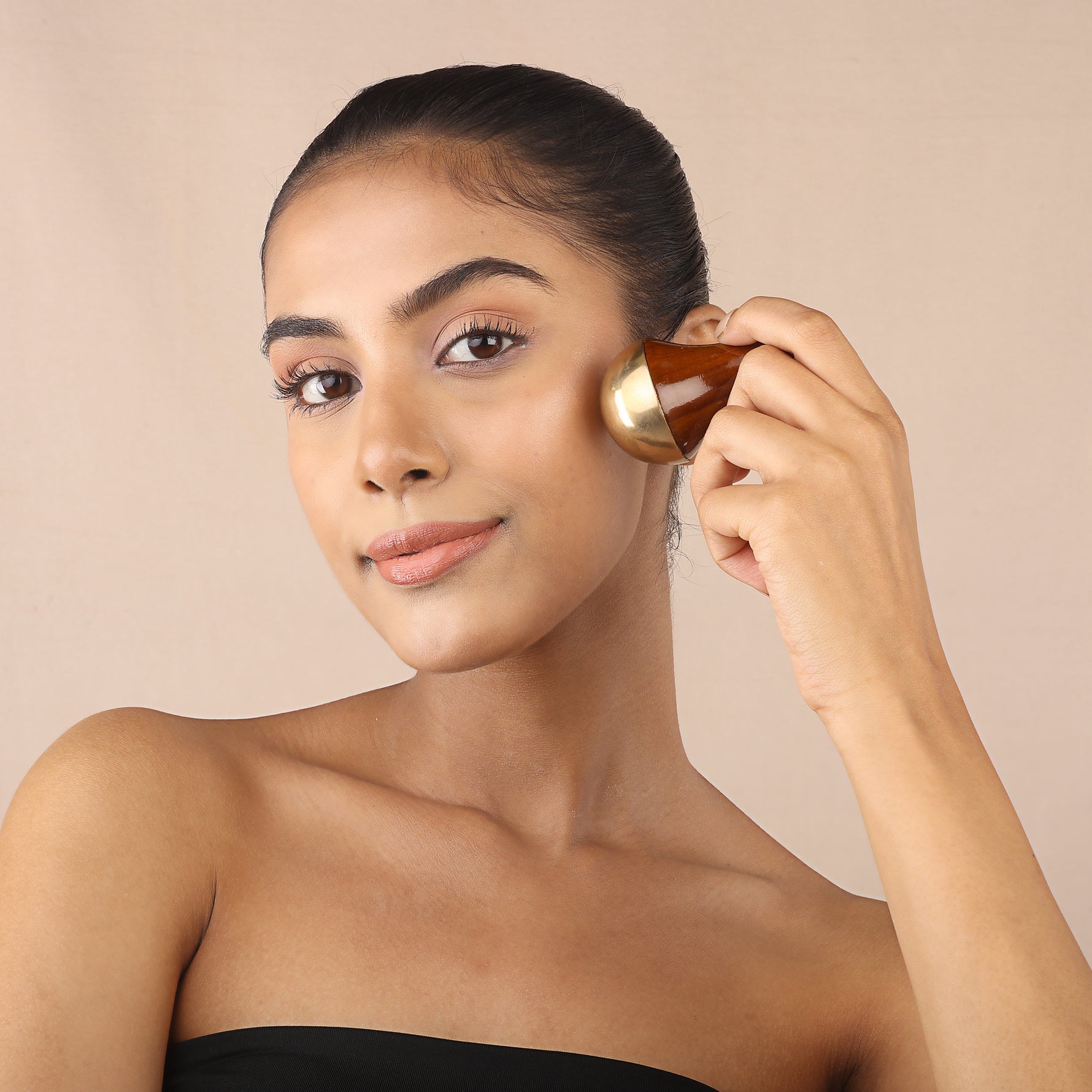
Seven smooth Kansa nodes. A carved wooden handle. Pressure precisely where you need it.
This tool is made for two practices: Śiro Abhyanga, the classical Ayurvedic scalp massage, and marma point work on the body. The rounded nodes are shaped to sit accurately on a marma point and sustain contact there your shoulders, the base of your skull, your upper back, the soles of your feet. Used slowly, with oil, the Kansa draws excess heat from your tissue. You feel the release immediately.
On the scalp the nodes cover a broad area with each movement. On the body a single node locates the precise marma point. One tool, two practices, one material that Ayurvedic tradition has relied upon for this quality specifically: solid bronze cools. It calms your Pitta, settles your Vata.

The Kansa Comb is a scalp tool cast from Kansa metal, the copper-tin bronze used in Ayurvedic ritual practice for centuries. The teeth of the comb are pointed and designed to reach the scalp through the hair, making contact with the marma points of the head as the comb moves slowly across the scalp. This is not a massage tool used with pressure. The correct technique is slow, deliberate, and gentle, the pointed teeth do the work; you simply guide the comb.
Kansa has a naturally cooling quality. In Ayurveda, this is associated with calming Pitta in the head, the accumulated heat that shows as scalp sensitivity, irritation, and a restless, overheated mind. The comb draws that heat gently outward as it moves across the scalp.
This is a tool for daily use. Two to three minutes in the evening, used dry or with a light hair oil, is sufficient. Used consistently, it becomes one of the quieter and more grounding habits in a daily Dinacharya practice of Śīrṣa Abhyanga.

How to Practice Shiro Abhyanga (Ayurvedic Head Massage)
Step 1 — Choose your oil
Select a hair oil suited to your hair type and concerns. Neelibhringadi Thailam is traditionally used for hair strength and natural colour. Brahmi Thailam supports a calm, clear mind while nourishing the scalp. Triphaladi Thailam is a cooling option for sensitive or Pitta-dominant scalps.
Step 2 — Warm the oil
Place the bottle in warm water for 2–3 minutes until the oil is comfortably warm. Warm oil absorbs more readily into the scalp and provides a more soothing experience. Never microwave or heat oil directly.
Step 3 — Apply to the scalp
Part your hair into sections and apply oil directly to the scalp using your fingertips or a dropper. Start at the crown and work outward. You need only a small amount — enough to lightly coat the scalp, not drench it.
Step 4 — Massage
Using your fingertips or a Kansa scalp massage tool, work the oil into the scalp using gentle circular motions. Cover the entire scalp — crown, temples, behind the ears, and the base of the skull. Spend at least 5 minutes. If using a Kansa tool, let the smooth bronze nodes glide across the oiled scalp with light, even pressure.
Step 5 — Rest and absorb
Leave the oil on for at least 30 minutes. For deeper nourishment, apply before bed and wash out in the morning. Cover your pillow with a towel if leaving overnight.
When to practice: 2–3 times per week is ideal. Classical texts recommend oiling the head daily, but even a weekly practice offers benefit. The best time is in the evening, as Shiro Abhyanga has a naturally calming, grounding effect.
Ayurvedic Hair & Scalp Care — Your Questions Answered
Kesh Charya is the Ayurvedic system of hair and scalp care. The term comes from Sanskrit — Kesha means hair, and Charya means routine or practice. It encompasses regular scalp oiling (Shiro Abhyanga), choosing hair oils based on your dosha, scalp massage to support circulation, and gentle herbal cleansing. Classical Ayurvedic texts describe Kesh Charya as part of Dinacharya, the ideal daily self-care routine.
The best oil depends on your hair type and what you are looking to support. Neelibhringadi Thailam is a classical Kerala formulation traditionally used for hair strength, reducing hair fall, and supporting natural hair colour — it is especially suited to Pitta and Vata hair types. Brahmi Thailam is a calming oil that nourishes the scalp while supporting mental clarity and restful sleep. Triphaladi Thailam is a cooling, Pitta-pacifying option with 27 herbs, well suited for sensitive scalps, dandruff, or premature greying.
Classical Ayurvedic texts recommend daily scalp oiling as part of Dinacharya. In practice, 2–3 times per week is a realistic and effective frequency for most people. If your scalp tends toward dryness (Vata), more frequent oiling is beneficial. If your scalp is naturally oily (Kapha), once a week may be sufficient. Consistency matters more than frequency — a regular weekly practice is better than occasional intensive treatments.
A Kansa scalp massager is a tool made from Kansa bronze (an alloy of copper and tin) with smooth rounded nodes designed to glide across the oiled scalp. The tool is used during Shiro Abhyanga to gently stimulate marma points on the head, support micro-circulation, and provide a deeper, more even massage than fingertips alone. In Ayurveda, Kansa metal is traditionally valued for its cooling quality, which is considered especially beneficial for calming excess Pitta in the head region.
Yes. Classical Ayurvedic hair oils like Neelibhringadi and Brahmi Thailam are plant-based formulations in sesame or coconut oil bases. They are gentle on the hair shaft and do not contain harsh chemicals. In fact, regular oiling can help maintain moisture and condition in hair that has been colour-treated. Apply the oil primarily to the scalp rather than the lengths if you are concerned about colour fading, and wash with a mild cleanser.
Always apply Ayurvedic hair oil to dry hair and a dry scalp. Oil and water do not mix, so applying to wet hair prevents proper absorption into the scalp. The traditional method is to apply warm oil to dry hair, massage it in, leave it for at least 30 minutes (or overnight), and then wash it out. This allows the herbal properties in the oil to be absorbed effectively.
Complete Your Morning Routine


