

UNLOCK 10% OFF

Kansa Tools for Marma Point Massage
Ayurveda identifies 107 marma points across the body, junctions of muscle, bone, nerve and energy where focused pressure creates a response far beyond the surface. Marma Abhyanga (marma point massage) is one of the oldest therapeutic practices in the classical texts, and the material of the tool matters. Kansa bronze has a natural cooling quality that Ayurveda associates with Pitta balance and tissue calming, which is why it has been the traditional choice for this work for centuries.
The tools in this collection are shaped specifically for sustained, precise pressure on marma points face, scalp, feet, hands and body. They are used by Ayurveda practitioners in clinical settings and by home practitioners who want to bring genuine marma work into their daily ritual. Apply with a Thailam or facial oil for best contact and glide.

The Mini Kansa Wand is cast from classical Kansa, a copper-tin bronze used in Ayurvedic facial practice for centuries. The dome is intentionally small sized to follow the orbital bone, reach the brow ridge, settle into the temple, and work the four marma points around the eye that a larger tool cannot address with precision.
Kansa has a naturally cooling quality. In Ayurveda, this is associated with calming Pitta, the accumulated heat that shows around the eyes as puffiness, sensitivity, and a dull, uneven complexion. Used with a face oil in slow, deliberate circles, the dome draws that heat outward and helps the oil absorb more completely than applying by hand.
This is the tool used in Netra Abhyanga, the traditional Ayurvedic eye-area ritual. At home, practiced for five minutes each morning or evening, it is one of the more quietly effective habits you can build into a daily routine.

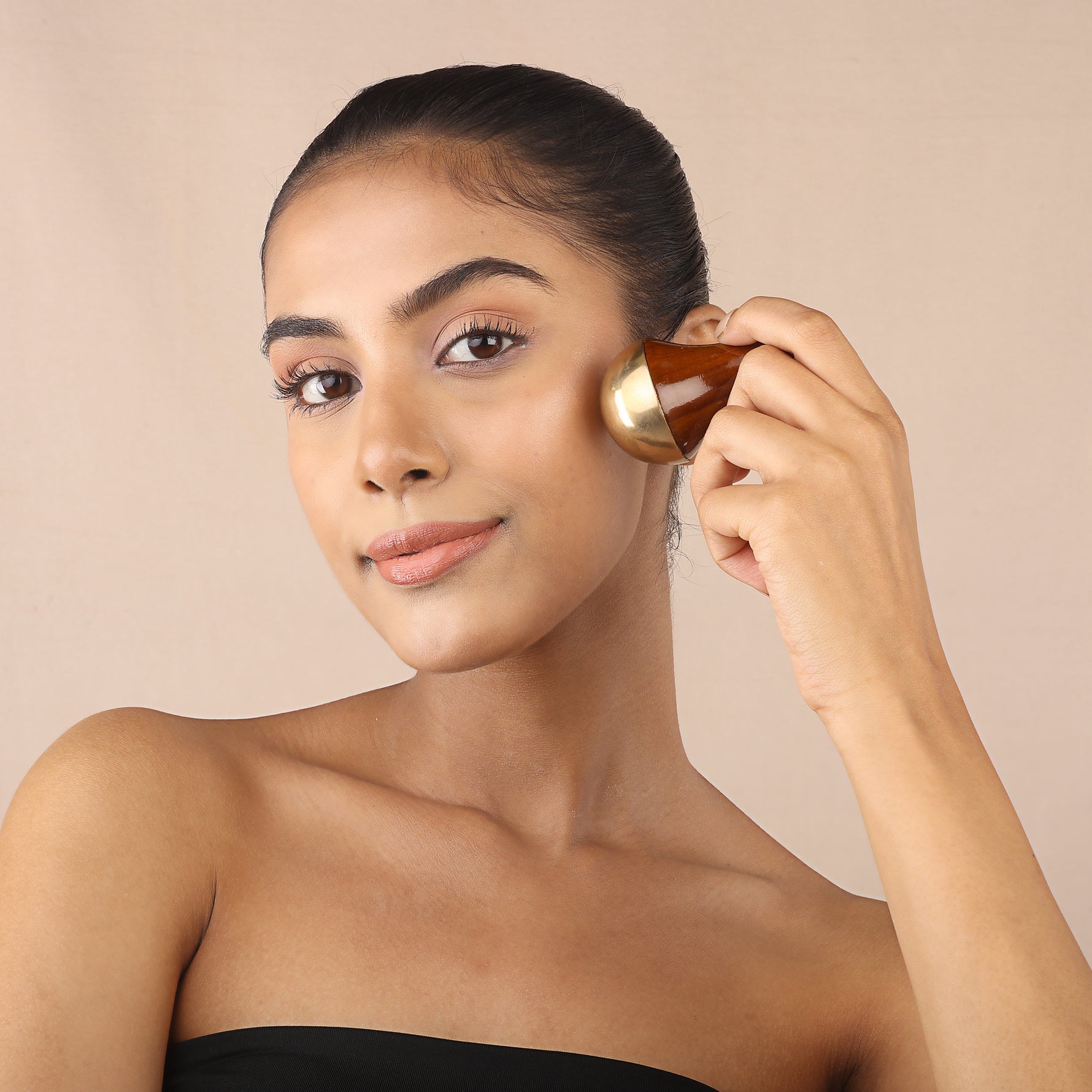
Two domes, each shaped for a different part of the face. The larger dome glides across cheeks, forehead and jawline, covering the broad, open areas in slow circular movements. The smaller dome turns for the precise work: temples, brow, under-eye, the edges of the nose.
The metal has a naturally cooling quality. In Ayurveda, this is traditionally associated with Pitta balance — a calming of warmth and reactivity in the skin. The faint grey-green tint you may notice during use is a natural reaction between the metal, the oil, and your skin's pH. It washes off easily and is not harmful.
Apply 3 to 4 drops of face oil before you begin. Work across both sides of the face, starting from the centre and moving outward. Gentle pressure is enough — the tool does the work. Five to ten minutes daily is ideal.
For external use only. Clean and dry thoroughly after each use. Store away from moisture.

Seven smooth Kansa nodes. A carved wooden handle. Pressure precisely where you need it.
This tool is made for two practices: Śiro Abhyanga, the classical Ayurvedic scalp massage, and marma point work on the body. The rounded nodes are shaped to sit accurately on a marma point and sustain contact there your shoulders, the base of your skull, your upper back, the soles of your feet. Used slowly, with oil, the Kansa draws excess heat from your tissue. You feel the release immediately.
On the scalp the nodes cover a broad area with each movement. On the body a single node locates the precise marma point. One tool, two practices, one material that Ayurvedic tradition has relied upon for this quality specifically: solid bronze cools. It calms your Pitta, settles your Vata.

An Ayurvedic foot-massage wand with a kansa (copper–tin bronze) dome and ergonomic hardwood handle. Used in Kansa Vatki/Padabhyanga to stimulate plantar marma points, support lymphatic flow, cool excess pitta, and relax the nervous system.

A hand cast Kansa (copper–tin bronze) bowl used in Padabhyanga and Kansa Vatki therapy. The natural cooling quality of kansa helps pacify pitta, soothe tired feet, and calm the nervous system while stimulating plantar marma points.

The Kansa Comb is a scalp tool cast from Kansa metal, the copper-tin bronze used in Ayurvedic ritual practice for centuries. The teeth of the comb are pointed and designed to reach the scalp through the hair, making contact with the marma points of the head as the comb moves slowly across the scalp. This is not a massage tool used with pressure. The correct technique is slow, deliberate, and gentle, the pointed teeth do the work; you simply guide the comb.
Kansa has a naturally cooling quality. In Ayurveda, this is associated with calming Pitta in the head, the accumulated heat that shows as scalp sensitivity, irritation, and a restless, overheated mind. The comb draws that heat gently outward as it moves across the scalp.
This is a tool for daily use. Two to three minutes in the evening, used dry or with a light hair oil, is sufficient. Used consistently, it becomes one of the quieter and more grounding habits in a daily Dinacharya practice of Śīrṣa Abhyanga.
Let customers speak for us


Love the Art of Vedas high quality products and there follow up with emails. Highly reliable. Highly recommended.

Products as described and shipped fast

Very good quality products and tools for ayurvedic treatments. I love Art of Vedas products.


snelle levering, en een goede kwaliteit


I ordered a Kansa Vatki Wand. Delivered the next day! And on a question I had if they had something in stock: yes, we'll be getting it for you from India. Great service.
Marma Point Massage at Home — Common Questions
In Ayurveda, marma points are specific anatomical locations where muscles, joints, bones, tendons, ligaments, and veins converge. Classical texts such as the Sushruta Samhita describe 107 marma points on the body. Gentle stimulation of these points through massage is part of traditional Ayurvedic bodywork.
Kansa marma tools are designed with smaller, more precise tips that allow targeted pressure on specific marma points. They are typically used with lighter, more focused movements compared to the broader strokes of a face or body wand. The smaller size gives the practitioner better control for detailed work.
Both. While Ayurvedic practitioners use marma-specific tools in clinical settings, the Art of Vedas Kansa marma tools are designed to be safe and accessible for home use. Start with gentle pressure on the commonly known marma points of the face, hands, and feet. Art of Vedas provides guidance on basic marma locations with each tool.
Start with very light pressure — less than you might expect. Marma work in the Ayurvedic tradition is about gentle, sustained contact rather than deep force. Hold the tool on each point for 3–5 seconds with steady, light pressure, then move to the next point. Increase pressure gradually over multiple sessions as you become familiar with how your body responds.
The most accessible and safe marma points for home practice are on the face (around the temples, between the eyebrows, along the jawline), the palms of the hands, and the soles of the feet. These areas respond well to gentle Kansa tool massage and are far from any sensitive structures. Avoid pressing deeply on the throat, inner wrists, or areas near the eyes.