

Marma Points: The Classical Ayurvedic Guide to Vital Energy Junctions
The concept of vital points on the body — locations where life force is concentrated, where the structures of the body intersect in ways that make them both powerful and sensitive — appears across many ancient medical traditions. In classical Ayurveda, this system is called Marma Vigyan: the science of marma points. It is documented in detail in the Sushruta Samhita, one of the three foundational classical Ayurvedic texts, in a context that reveals much about how the classical tradition understood the body.
Sushruta describes marma points primarily in a surgical text — he identifies the 107 points as locations that, if injured, produce significant consequences to health or life. This framing is important: marma points in classical Ayurveda are not primarily an acupressure system in the modern sense but an anatomical observation — a map of where vital force (Prana) and body tissue (Dhatu) converge in ways that make those locations clinically significant in both directions. Injury to a marma point is described as particularly serious; conscious, gentle stimulation of a marma point is described as particularly supportive of the organ system, body part, or physiological function associated with it.
This dual nature — vulnerability and vitality concentrated in the same location — is characteristic of the classical Ayurvedic understanding of the body, in which the most potent areas are also the most sensitive.
The 107 Marma Points: Classification
Classical texts classify the 107 marma points by location, by the tissues they involve, and by their clinical significance. The Sushruta Samhita describes five categories of marma based on the tissues at each site:
Mamsa Marma — points located at muscular junctions. 11 in total. These are associated with the strength and function of the muscular system and motor activity.
Sira Marma — points at venous or vessel junctions. 41 in total — the largest group. These are associated with the circulation of Rasa and Rakta (the fluid and blood tissue layers) and with the functioning of the cardiovascular and fluid systems.
Snayu Marma — points at ligament or tendon junctions. 27 in total. Associated with structural integrity, joint health, and the proper anchoring of the body's moving parts.
Asthi Marma — points at bony junctions. 8 in total. Associated with the health of the skeletal system and the structures that depend on it.
Sandhi Marma — points at joints. 20 in total. Associated with mobility, Vata in the joints, and the fluid cushioning of articulating surfaces.
This classification reflects a fundamentally anatomical system: the 107 points are not arbitrary or energetic in the abstract sense but are located at places where multiple tissue types converge — where vessels meet tendons, where tendons cross joints, where muscles insert near major nerve pathways.
The 107 Points by Body Region
Classical texts also classify marma by location:
- Upper extremities (arms and hands): 22 points
- Lower extremities (legs and feet): 22 points
- Trunk (chest, abdomen, back): 12 points
- Back (posterior trunk): 14 points
- Head and neck: 37 points
The concentration of marma points in the head and neck region — 37 of 107, over a third of the total — is significant. Classical Ayurvedic anatomy treats the head as the seat of Prana (life force), Ojas (vital essence), and the master sense organs. The high marma density in this region reflects both its clinical importance and its particular sensitivity.
Key Marma Points in Daily Practice
Classical texts describe specific therapeutic associations for individual marma points. The following are among the most relevant to daily self-care practice:
Head and Face Marma
Sthapani — located between the eyebrows at the root of the nose, corresponding to the Ajna region. Classical texts associate Sthapani with the mind (Manas), cognitive clarity, and the primary sense of vision. It is one of the Mahavital marma — the four sites considered most critical in the classical hierarchy. Gentle stimulation of Sthapani is classically associated with support for mental clarity and the settling of Prana Vata (the sub-dosha governing the mind and senses).
Shankha — at the temples, bilaterally. Associated in classical texts with the nervous system, specifically with functions related to speech and cognitive processing. Bilateral temple massage with warm oil is one of the most accessible daily marma practices and one of the most immediately perceptible in its calming effect.
Apanga — at the outer corners of the eyes. Associated with the eyes and with Alochaka Pitta (the sub-dosha governing visual perception). A sensitive point often addressed in classical facial massage sequences.
Hanu — at the jaw, bilaterally. Associated with the jaw's motor function and with the relationship between jaw tension and overall Vata in the head. One of the points regularly worked in Kansa facial massage.
Krikatika — at the junction of the skull and the cervical spine, bilaterally. Classically associated with the head-neck-shoulder complex and the circulation of Prana between the body and the head. Working this point as part of a neck and shoulder practice is one of the classical approaches to supporting the downward Prana Vata pattern (Prana moving correctly from head to body).
Adhipati — at the crown of the head, the single point classical texts describe as the Mahavital (most important) marma of the head. Associated with Prana itself, the central nervous system, and the overall vitality of the head. Oil application to Adhipati — Shiro Abhyanga (head oiling) — is described in classical texts as one of the most powerful daily practices for Vata regulation, sleep, and the nourishment of the nervous system.
Torso Marma
Nabhi — at the navel. Considered in classical Ayurvedic anatomy as the root of all body channels (Srotas) and the centre of Samana Vayu (the sub-dosha governing digestion and assimilation). Nabhi is one of the most important marma for digestive health and overall physiological balance.
Hridaya — at the heart, on the sternum. Associated with the heart (Hridaya), Vyana Vayu (the sub-dosha governing circulation and distribution), and Ojas (which classical texts locate primarily in the heart). This is a point of particular emotional and energetic significance in classical practice.
Lower Extremity Marma
Talhridaya — at the centre of the sole of each foot. One of the most important marma in daily practice — Pada Abhyanga (foot oiling and massage), specifically targeting Talhridaya and the surrounding sole, is consistently referenced in classical texts as one of the most effective practices for settling Vata, supporting sleep, and grounding the nervous system. The concentration of Vata-associated marma in the feet is why this practice has such consistent and perceptible effects.
Gulpha — at the ankle joints, bilaterally. Associated with the lower leg's circulation and mobility.
Janu — at the knees, bilaterally. Associated with the musculoskeletal health of the leg and with the movement of Vata through the lower body's major joints.
Working with Marma Points: Tools and Methods
Classical Ayurvedic practice works with marma points through several approaches. In the context of daily home practice, the most relevant are:
Warm Oil Application
The simplest and most consistently recommended approach in classical texts is warm oil applied to marma-rich areas: the scalp (Shiro Abhyanga), the soles of the feet (Pada Abhyanga), the ears (Karna Purana), and the full body in general Abhyanga. Oil's inherent qualities in classical pharmacology — penetrating, warming, nourishing, Vatahara — make it the primary medium through which marma stimulation is delivered.
Dhanwantharam Tailam is the most widely referenced classical oil for general marma work and Abhyanga. The Abhyanga guide covers the full body oil massage practice and its relationship to the marma system.
Kansa Wand Massage
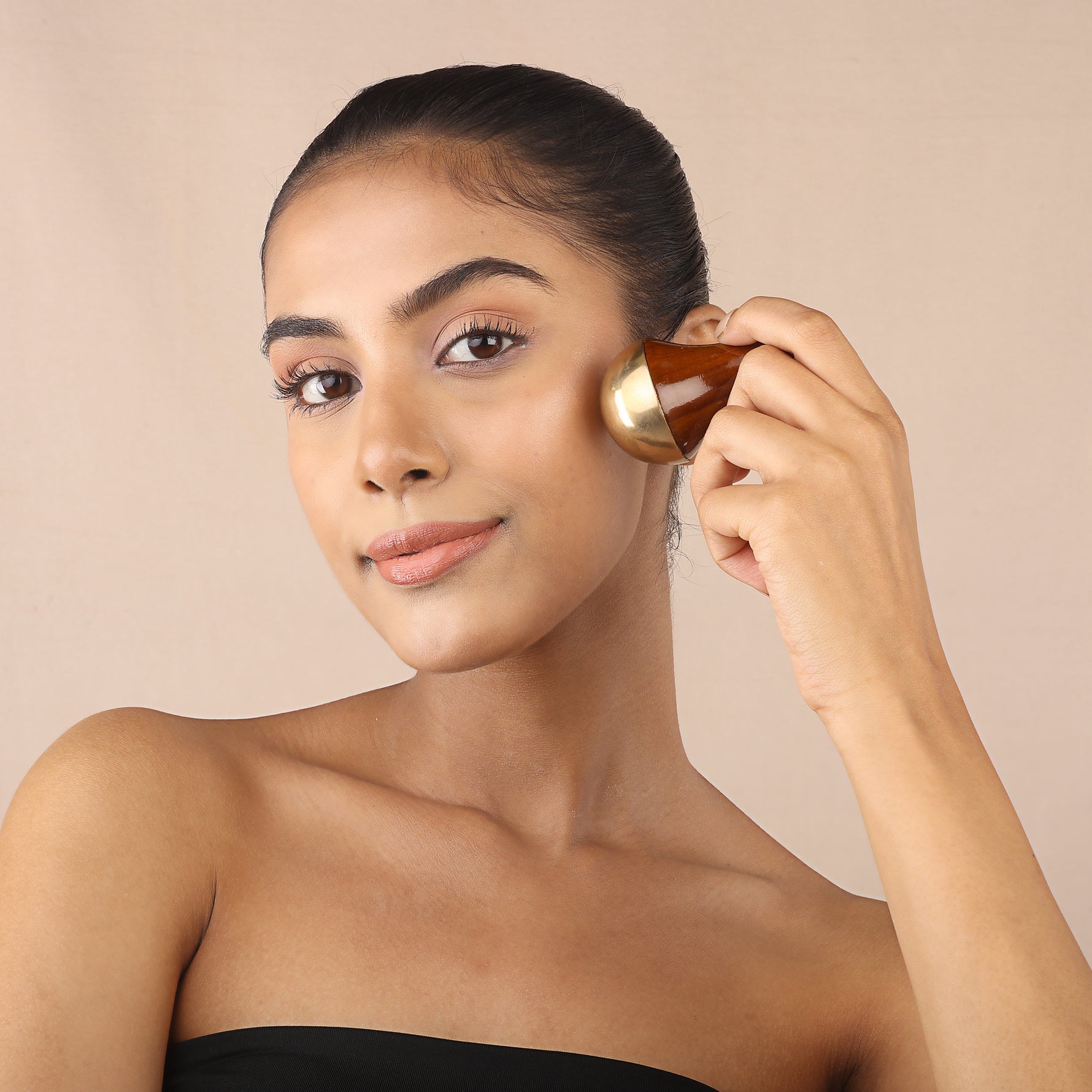
The Kansa wand is a classical Ayurvedic tool whose application naturally aligns with marma work through its smooth dome head and the gliding, circular movements of classical Kansa technique. The facial Kansa sequence specifically traces the major facial marma points — Sthapani, Apanga, Shankha, Hanu — as part of a structured movement pattern. The alloy's properties interact with the marma sites in ways described in classical tradition as drawing Pitta heat and supporting the flow of Prana through the facial channels.
The Kansa wand facial massage guide maps the specific movements to the facial marma points. The Kansa body massage guide covers body application including foot marma work.
Nasya Oil and Head Marma
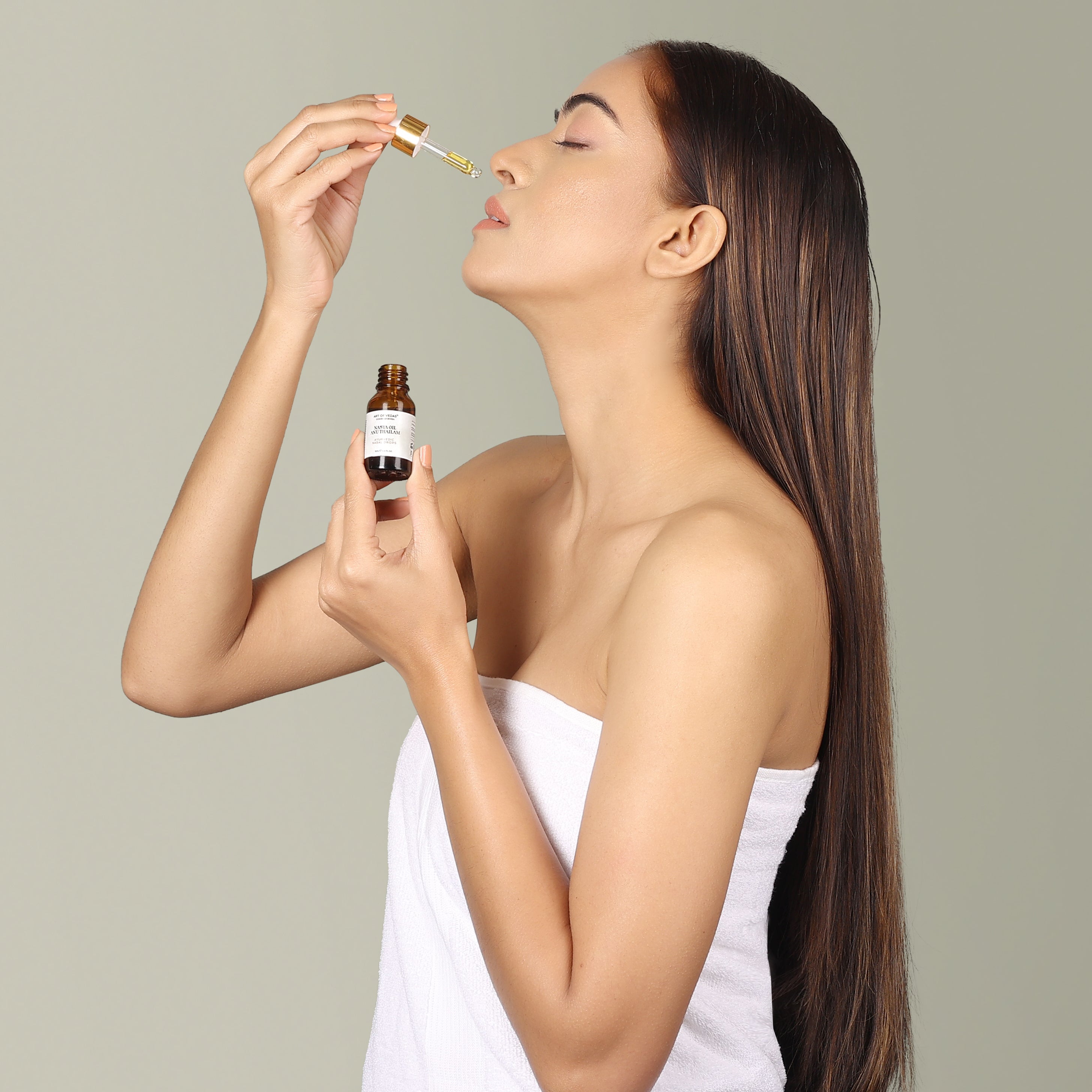
Nasya — the classical practice of applying oil drops to the nasal passages — is described in classical texts partly in terms of its action on the head marma. The nasal passages are considered a direct pathway to the head's interior, and the oil's properties are understood to reach and support the head marma including Sthapani and Adhipati through this route. This is one of the classical explanations for why Nasya has consistent effects on mental clarity and head-related Vata.
Professional Marma Therapy
In professional Ayurvedic clinical practice — in Panchakarma centres and Ayurvedic clinics — marma therapy (Marma Chikitsa) is a specialised treatment in which a trained practitioner works systematically through the relevant marma points for a given client's condition, using specific pressure, oil, and sequence. This is distinct from the gentle stimulation of daily home practice and requires appropriate training. The Panchakarma guide covers the professional treatment context.
Marma Points and the Doshas
Vata tends to accumulate in the joints (Sandhi Marma), the lower extremities, and the nervous system — which is why foot marma (Talhridaya, Gulpha) and joint marma are particularly significant in Vata-balancing practice. Daily Pada Abhyanga and general Abhyanga addressing these points are among the most classically recommended practices for chronic Vata elevation. The Vata guide covers Vata's movement through the body's channels and marma system.
Pitta tends to concentrate in the liver, the eyes, and the skin — with Sira Marma (vessel junctions) particularly relevant. Facial marma associated with Alochaka Pitta (visual function) — Apanga and the eye-region points — are relevant in Pitta-care practice.
Kapha tends to settle in the chest and upper respiratory tract — making Hridaya (heart-sternum marma) and Stanarohita (chest marma) relevant in Kapha-mobilising practice. The stimulating quality of Kansa and Garshana applied to these areas addresses the settling and heaviness of Kapha in the upper body.
Integrating Marma Awareness into Daily Practice
Working with marma points does not require a separate formal practice — it is most sustainable when integrated into the daily Dinacharya practices that already involve these areas:
During Shiro Abhyanga (head oiling): give extra attention to Adhipati (crown) and Krikatika (skull-neck junction).
During facial Kansa massage: follow the classical movement sequence that traces Sthapani, Shankha, Apanga, and Hanu.
During Pada Abhyanga (foot oiling): spend additional time on the sole (Talhridaya), the ankle (Gulpha), and the base of the toes.
During general Abhyanga: slow the pace slightly at the major joints — knees (Janu), elbows, wrists, ankles — which correspond to Sandhi Marma.
The daily self-care tools guide covers how these practices integrate into a complete morning sequence. The Dinacharya guide shows the full sequence and timing.
For an individualised marma assessment — identifying which points are most relevant to your constitution and current health — an Ayurvedic consultation with one of our AYUSH-certified Ayurvedic doctors provides a full classical evaluation and specific practice recommendations.
This guide presents traditional Ayurvedic knowledge about marma points for educational purposes. The practices described are general self-care approaches and are not a substitute for professional medical assessment or treatment. For personalised guidance, consult a qualified AYUSH-certified Ayurvedic practitioner.


